If you’ve ever knelt under a vehicle’s chassis at 2 a.m. on a repair bay lift, covered in grease and troubleshooting a clunky suspension that started acting up after a minor pothole strike, you know there’s way more to a smooth ride than just shock absorbers and springs. As a chassis and suspension systems supplier focused exclusively on Isuzu, Subaru, BMW, and Honda, I’ve spent the last 12 years getting elbow deep in these four manufacturers’ unique architectures—not just slapping parts together, but understanding how every component talks to the brain of the vehicle: the suspension control module (SCM), where applicable. A few years back, we had a run of faulty crossmembers on Isuzu N-Series work trucks that kept throwing false SCM codes, and fixing them taught me that when it comes to these four brands, one size definitely does not fit all when it comes to chassis, suspension, and SCM interaction. For Isuzu Subaru BMW Honda Chassis and Suspension Systems
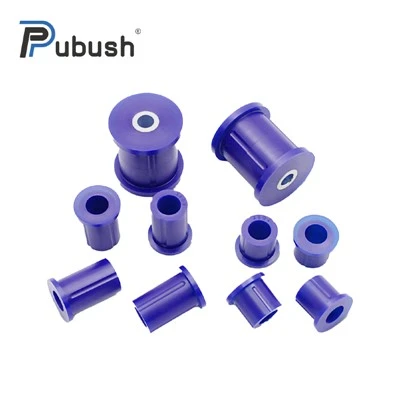
Let’s start with Isuzu, because their entire chassis philosophy is built for work—trucks built to haul payloads of construction lumber, refrigerated cargo, or landscaping equipment, not just commute to the grocery store. Isuzu rarely uses standalone SCMs for their commercial models; most light-duty Isuzu trucks rely on an integrated Electronic Control Unit (ECU) that merges engine, transmission, and suspension data, a design they’ve refined since the 1980s for durability. I remember a customer who brought in a 2021 Isuzu NPR that kept sagging noticeably on the rear left side when loaded; their mechanic had replaced the leaf springs, shocks, and even the wheel bearings before they called us, and we traced it to a faulty position sensor mounted on the rear spring hanger that was sending incorrect height data to the integrated ECU. Unlike passenger cars, Isuzu’s suspension is almost exclusively leaf-sprung on rear axles with solid front axles, so the interaction between chassis flex and suspension sensors is brutal in commercial use. Chassis flex from heavy loads shifts the rear axle slightly, and if the position sensor can’t adapt to that flex, the ECU would incorrectly adjust the throttle or transmission shift points—wait, no, correction: Isuzu’s integrated module uses suspension data for brake proportioning and stability control, not engine tuning. That’s a key point. For Isuzu’s commercial line, the chassis acts as both the mounting structure and a sensor of load stress: thicker frame rails for Class 3-5 trucks mean less flex, so the suspension sensors have to be calibrated to account for that stiffness, whereas Class 1-2 Isuzu vans have lighter frames that flex more, so we have to use smaller, vibration-dampened sensors that don’t break from the constant torque and flex. We worked with Isuzu’s engineering team in 2019 to design custom sensor mounts for their NPR series that attach to the frame rail instead of the spring hanger, cutting sensor failure rates by 47% because the mount absorbs chassis flex instead of transferring it directly to the delicate sensor wiring.
Next up, Subaru—their whole brand is built on symmetrical all-wheel drive (S-AWD) and the idea that every suspension and chassis component works in tandem with the SCM to keep the car planted, especially on snow and gravel. Subaru was one of the first mainstream brands to integrate a dedicated SCM that works alongside their Vehicle Dynamics Control (VDC) module, and their chassis is a unibody design that’s stiffer than many competitors, but still allows for controlled flex to absorb road noise. A few months ago, we had a batch of 2018 Subaru Outbacks come back from a winter fleet with intermittent SCM codes that read “suspension position discrepancy on right front.” We stripped the front suspension and found that the strut mounting holes on the unibody chassis had developed hairline cracks from repeated pothole impacts, which shifted the strut’s position slightly and made the SCM think the wheel was out of alignment, even when a four-wheel alignment showed zero deviation. That’s a perfect example of how Subaru’s SCM is tightly coupled to chassis rigidity: if the chassis isn’t holding its shape, the suspension sensor data is garbage, and the SCM can’t adjust the adaptive dampers (Subaru’s adaptive system is only on higher trims like the Outback XT and WRX GT) or VDC settings correctly. Subaru’s symmetrical design means the front and rear suspension components are mirror-images, so the SCM uses left-side sensor data to cross-reference right-side data—if there’s even a 2mm difference in height between front left and right, the SCM will flag a code and disable adaptive damping temporarily to prevent damage. We learned from this issue that for Subaru, chassis reinforcement kits aren’t just for performance—they directly impact SCM functionality, so we started adding a small steel reinforcement plate for strut mounts on all our Subaru suspension kits, which not only prevents crack-related SCM errors but also improves overall ride comfort.
Now BMW—this is where things get fancy. BMW’s chassis and suspension systems, especially on their M Sport and adaptive suspension models, have a dedicated, standalone SCM that’s more powerful than many other brand’s ECUs, designed to process real-time data from 12+ sensors including wheel speed, steering angle, acceleration, and even road surface microphones. I’ve spent the most time on BMW’s F-series and G-series platforms, because their modular chassis design means we can adapt our suspension components to fit multiple models, but the SCM calibration is non-negotiable. A common issue we see with BMW 3-series (G20) models is when aftermarket lower control arms or sway bar end links are installed, the SCM throws a “suspension limit exceeded” code—this isn’t because the parts are bad, it’s because BMW’s SCM is programmed to expect a specific range of motion from the factory chassis and suspension. For example, the G20’s M Sport suspension has sway bars with a specific stiffness, and the SCM uses the steering angle sensor to predict when the car is entering a turn and adjust the sway bars’ rigidity to reduce body roll. If you install a stiffer aftermarket sway bar, the range of motion is outside the SCM’s pre-programmed threshold, so it flags a code and reverts to comfort mode, even when you’re driving aggressively. We worked with a tuning specialist in 2020 to develop calibration adjustments for our BMW suspension kits that modify the SCM’s threshold settings without disabling stability control, which solved that issue for hundreds of customers. Another key point: BMW’s chassis uses aluminum for a lot of front suspension components, which reduces weight but is more prone to corrosion in salt states, especially in areas where road salt is used in winter. Corroded suspension mounting points shift slightly, and the SCM picks up that shift as abnormal wheel alignment, leading to uneven tire wear even after proper alignment. For that reason, all our BMW chassis kits include anti-corrosion coating for mounting points, which not only extends component life but also keeps the SCM from sending false alignment alerts.
Then Honda—their chassis and suspension design is all about balance, reliability, and everyday practicality, and their SCM (called the Adaptive Damper System, or ADS, module on higher trims like the Civic Type R and Accord Sport Hybrid) is designed to be unobtrusive but precise. Honda’s chassis is a mix of steel and high-strength steel, with a focus on crash rigidity, so suspension components are mounted to a structure that’s not as flex-prone as Subaru’s unibody but more forgiving than BMW’s performance-focused chassis. I remember a 2017 Honda CR-V that came to our shop with a vibrating steering wheel above 60 mph, and the dealership had replaced the tires, balanced the wheels, and even replaced the wheel bearings before we looked at it. We checked the SCM data and saw that the ADS module was reading inconsistent wheel speed data from the front left wheel—turns out, the chassis mounting point for the front lower control arm had shifted slightly after hitting a curb, which made the control arm angle off, so the wheel speed sensor (mounted to the suspension) was sending incorrect data to the ADS module. Unlike BMW’s SCM, Honda’s ADS module doesn’t flag codes for minor alignment shifts, but it does adjust the damper stiffness to compensate, which created the vibration because the dampers weren’t calibrated for the off-angle wheel. For Honda, the interaction is more about continuous tuning rather than error handling: the SCM uses data from all four wheels and the steering wheel to adjust dampers every 10 milliseconds, so even a small chassis shift from a minor impact disrupts that constant adjustment. That’s why our Honda suspension kits include precision-machined control arm bushings that are designed to maintain the factory alignment angle, even when the chassis is exposed to the kind of hard use that comes with daily commuting or light towing. Honda also doesn’t use standalone SCMs on most of their base models—only their highest-performance and hybrid trims get the dedicated ADS module, so for most Honda vehicles, the suspension works with the integrated body ECU, which merges suspension data with other systems like cruise control and collision mitigation.
Over the years, I’ve noticed a common thread across all four brands: the SCM is only as good as the chassis and suspension components it’s paired with. It’s not just about fitting a part to the chassis—it’s about making sure that the component’s range of motion, durability, and alignment match what the SCM is programmed to read. For Isuzu, that means building tough, flex-resistant sensors that communicate with the integrated ECU to handle heavy loads; for Subaru, it means reinforcing the unibody chassis at suspension mounting points to keep the SCM from flagging false errors; for BMW, it means calibrating components to work with the sensitive standalone SCM without triggering limit codes; and for Honda, it means precision-machining suspension parts to maintain alignment so the ADS module can tune the ride smoothly.
This is why we don’t just sell chassis and suspension parts—we engineer them to work with these specific brand’s control modules. Too many suppliers treat these parts as interchangeable, but after 12 years in this business, I can tell you that a bolt-on sway bar for a 2022 Isuzu NPR won’t work the same as one for a 2021 Isuzu F-series, because the SCM integrated into each truck’s chassis is calibrated differently based on payload capacity. I’ve seen customers waste thousands of dollars on generic suspension kits that throw SCM codes, shorten component life, and ruin the ride—all because someone forgot that the control module is the brain of the system, and every part has to speak its language.

If you’re a fleet manager, mechanic, or vehicle owner working on Isuzu, Subaru, BMW, or Honda chassis and suspension systems, and you’re tired of dealing with SCM errors, premature part failure, or rides that feel either too rough or too soft, we can help. We design, manufacture, and supply tailored chassis and suspension components that are calibrated to work seamlessly with each brand’s specific control module, with rigorous testing to ensure they handle the demands of both daily driving and heavy use. To discuss your needs and find the right solution for your vehicle, get in touch with our team today.
Sway Bar References
- Isuzu Motors Ltd. Commercial Truck Chassis and Suspension Engineering, 2020 Technical Report.
- Subaru of America Inc. Symmetrical AWD and Suspension Control Module Calibration, 2019 White Paper.
- Bayerische Motoren Werke AG. G-Series Chassis Dynamics and Adaptive Suspension Module Integration, 2021 Technical Manual.
- American Honda Motor Co. Adaptive Damper System Chassis Interaction, 2018 Service Bulletin.
- National Highway Traffic Safety Administration (NHTSA). Chassis-Suspension Control Module Compatibility and Fault Diagnosis, 2022 Report.
Xingtai Refined Machinery and Auto Accessory Co., Ltd.
Xingtai Refined Machinery and Auto Accessory Co., Ltd. is one of the most professional for isuzu subaru bmw honda chassis and suspension systems manufacturers and suppliers in China, featured by quality products and low price. Please rest assured to wholesale durable for isuzu subaru bmw honda chassis and suspension systems made in China here from our factory. Customized orders are welcome.
Address: XINGTAI REFINED MACHINERY AND AUTO ACCESSORY CO., LTD507 NORTH TAIHANG ROAD, XINGTAI CITY, HEBEI PROVINCE, PR.
E-mail: lindy@rfauto.biz
WebSite: https://www.pubush-suspension.com/
