Hey there, I’m Jake, and if you’ve ever worked with event production, retail branding, corporate AV, or even educational spaces, you’ve probably stared at a blank wall thinking, “What if we put a screen here—but what size?” For years, indoor fixed LED displays felt like one-size-fits-all monsters that either dominated a room or got lost in the corner. As a supplier who’s been troubleshooting these exact pain points for over a decade, let me cut through the noise: yes, indoor fixed LED displays can absolutely be customized in size—no more settling for a screen that doesn’t fit your space or needs. Indoor Fixed LED Display
I still remember the first client I walked through this with, back in 2015. It was a mid-sized tech startup’s new office launch event, and their original floor plan called for a standard 10×8 foot LED screen. But when their AV team measured the main conference room, they realized that size would hang over the stage and block sightlines for 20% of the back row. The client panicked—they’d already paid a deposit on the standard unit, and the install window was just two weeks away. I sat down with their AV lead that night, walked through our modular LED panels, and explained how we could tweak the dimensions on the fly. We swapped out two of the 1×1 foot standard tiles we’d planned to use for thinner, edge-matching tiles, adjusted the bezel spacing, and ended up with a screen that was 11.5×7.2 feet—exactly the right fit. That job is still one of my favorite stories, because it proved customization wasn’t a “nice-to-have” luxury—it was a solution to real, everyday problems.
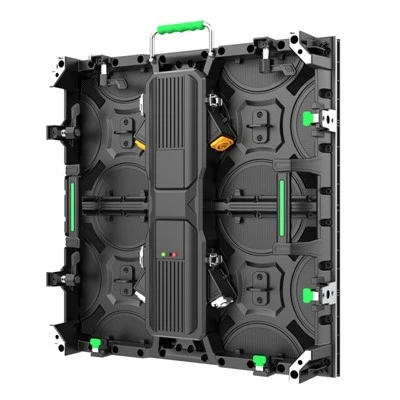
So how does this customization actually work, beyond the case studies? Let’s break down the science and the practical stuff, because it’s not just slapping tiles together. First, indoor fixed LED displays are built on a modular panel system—most suppliers (including ours) use uniform, interlocking tiles that range from 500x500mm up to 1x1m, depending on the pixel pitch you need. Pixel pitch is the distance between individual LEDs, right? That’s the key for both resolution and size. For a corporate lobby where people are standing 10 feet away, a 2.5mm pitch works perfectly, but a control room where operators are 3 feet away needs a tighter 1.2mm pitch. Here’s the thing: the base modular framework is the same, so adjusting width or height only requires adding or removing tiles, not rebuilding the entire display core. Unlike old LCD walls, which have fixed bezels that bulk up every time you add a panel, LED’s seamless design means you can adjust size incrementally, not just in whole panel units. That’s a game-changer for spaces that have odd, non-standard dimensions—like a curved restaurant wall that bulges a little in the middle, or a museum exhibit niche that’s just 7 feet wide, not 8.
Wait, but what about super-large or super-small custom sizes? I get that skepticism—if I had a dollar for every client who said “can you make it 18 feet wide but only 3 feet tall?” I’d be retiring in a tiny beach house. The answer is still yes, but there are a few factors to consider. For ultra-narrow or ultra-tall displays, pixel pitch is the first check. If you want a 3-foot-tall screen above a hotel registration desk, you don’t need a wide pitch—1.8mm would keep the text sharp for guests approaching the desk. For a 30-foot-wide wall in a corporate atrium, a 3mm pitch keeps costs down without sacrificing clarity from the 15-foot viewing distance. We’ve built displays as small as 2×2 feet for retail product demo counters, and as large as 60×12 feet for stadium video boards adjacent to indoor concourses. The hardware can handle it because the driver boards and power supplies are modular too—we don’t have to source a custom part for a 10-foot-tall display; we just use smaller driver tiles for the vertical edges.
One of the most common misconceptions I hear is that custom sizing means custom costs or long lead times. Ten years ago, that might have been true, but modern manufacturing has streamlined this. At our facility, we keep a stock of all standard panel sizes and pixel pitches, so we can adjust dimensions in 24 hours of receiving a client’s final measurement. The real cost difference comes down to the complexity of the size, not the size itself. A simple rectangular 10×8 foot display costs the same as a 10×8 foot display with a 2-foot cutout for a window—because we just adjust the panel layout in the design software, not the hardware. We charge a small setup fee for non-standard shapes (like curves or cutouts) but that’s usually less than 5% of the total order, and lead times stay in line with standard orders—usually 2-3 weeks for most indoor projects.
I also want to talk about use cases, because customization isn’t just about fitting a wall. It’s about amplifying your message. Last year, we worked with a high-end fashion brand for their New York City pop-up. Their main wall was 25 feet wide, but they wanted to showcase 3 different runway looks, so a single 25-foot screen would have spread the content too thin. Instead, we built a custom display split into 3 equal 8-foot wide sections, each with its own input, but seamless enough that it looked like one continuous screen when showing the full runway reel. The client loved it because they could highlight each collection without losing the immersive feel of a large LED. Another client was a hospital that needed a display for their pediatric wing—they didn’t want a big, boxy screen by the waiting room, so we built a curved, 12-foot wide screen that wraps around a play area, with a 5-foot tall vertical section for kid-friendly videos. It’s functional, safe (all our indoor displays have rounded edges and low heat output), and fits the space perfectly.
Now, I know some of you are thinking, “What about installation? Can a custom-sized display actually be mounted correctly?” That’s another point I see skipped in marketing—installation is just as important as the size itself. Every custom order comes with a free site survey, where our team measures the wall, checks for power and connectivity, and designs a mounting solution tailored to the display size. For a 15-foot tall display in a lobby, we use a recessed mount so it sits flush with the ceiling, not sticking out 6 inches. For a custom 4-foot tall display in a café, we use a lightweight wall bracket that doesn’t damage drywall. We also include remote calibration for all custom displays, so even if you built it to exact size, the colors and brightness match across the entire surface—no dark edges or dim corners, which is a common issue with custom builds from smaller suppliers.
I’ll be honest, there are limits. If you need a screen that’s less than 1 foot diagonal, LED isn’t the right fit—small LCD panels work better there. And if you need an ultra-high resolution screen with a pitch under 0.8mm, there’s a slight threshold for how small you can make the total size before pixel density causes eye strain, but that’s a rare use case. For 99% of indoor fixed display needs—retail, corporate events, museums, healthcare, education—custom size is not only possible, it’s probably the best way to get the exact impact you want.
At the end of the day, I started in this business because I saw how a screen that doesn’t fit can ruin a whole event or brand moment. Last quarter, a client came to me after a bad experience with a competitor that refused to adjust their standard screen, resulting in wasted space and a clunky install. We built them a custom 10×6 foot display for their trade show booth, fit exactly between their two booth fixtures, and they told us it was the best investment they made that year—it drew 30% more traffic than their competitor’s standard screen next door.
If you’re currently designing a space, planning an event, or rebranding your venue and staring at a wall that doesn’t match a standard LED size, don’t settle. Reaching out to a supplier that offers custom sizing isn’t a hassle—it’s the way to get a display that works for your space, not against it. Whether you need a tiny 3×2 foot screen for a bar’s menu wall or a massive 50×10 foot display for a corporate atrium, custom sizing is flexible, affordable, and tailored to your exact needs.

If you’re ready to stop guessing at screen sizes and start building a display that fits your vision, get in touch. We can walk through your space, review your goals, and put together a custom indoor fixed LED display plan that works for you, no hidden fees or complicated hoops to jump through.
Outdoor Fixed LED Display References:
- "Modular LED Display Technology: Customization and Application Considerations," Display Today Journal, 2022
- "Indoor Fixed LED Displays: Installation and Design Best Practices," AV Industry Standards Association, 2021
- "Pixel Pitch and Viewing Distance for Commercial Displays," Digital Signage Federation, 2020
Shenzhen TrueColor LED Co., Ltd.
As one of the most professional indoor fixed LED display manufacturers in China, we also support customized service. We warmly welcome you to wholesale durable indoor fixed LED display for sale here from our factory. If you have any enquiry about cooperation, please feel free to email us.
Address: 3/F, Bldg A9, 10 Longyi Rd, Fuyong Sub-dist, Bao’an Dist, Shenzhen
E-mail: sales@truecolor-led.com
WebSite: https://www.truecolor-led.com/
