If you’ve ever walked into a warehouse and watched a box folding machine snap and fold flat cardboard into uniform, crisp retail boxes, you might have wondered: can that same machine handle boxes with irregular edges? As a box folding machine supplier, I get this question every week, usually from packaging engineers or small business owners who’ve outgrown manual folding but have products that don’t fit into standard rectangular boxes. Let me break this down, with real-world examples, technical context, and what this means for your operation—no fancy jargon, just the straight talk I give to clients who call our shop at 2 a.m. panicking about custom packaging deadlines. Box Folding Machine
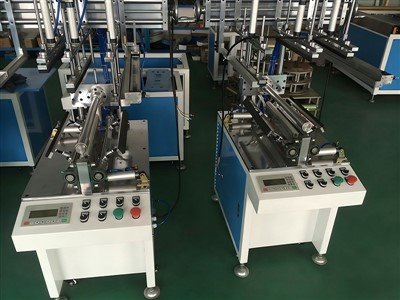
First, let’s get one thing straight: “irregular edges” isn’t a one-size-fits-all term. A lot of people mean different things when they say that. It could be a box with a curved top edge for a luxury candle, a box with notched sides to fit a product handle, or even a lumpy, non-rectangular shape made from die-cut board that doesn’t have straight, parallel sides. For decades, box folding machines were built exclusively for standard slotted container (RSC) boxes—rectangular, with four straight sides, evenly spaced creases, and consistent edge lengths. That’s why when a client first says “I need a machine for boxes with weird edges,” I usually start by asking to see a sample of their die-cut cardboard. That’s non-negotiable, because not all “irregular edges” are the same.
Ten years ago, the answer to this question would have been a hard no. The box folding machines we sold back then relied on fixed, linear folding arms that moved along a set path, designed to line up with straight crease lines on standard board. If a crease was curved, or a side was uneven, the folding arms would either bend the cardboard too hard (causing crease cracking) or not hard enough (leaving gaps that made the box useless). We actually had a client once, a handmade ceramic mug brand, who tried to use our old standard machine for their custom curved gift boxes. They ended up with a pile of wrinkled cardboard that cost them $1,200 in wasted material—we still have that sample hanging on our shop wall as a reminder of why we changed our design.
Here’s what changed: modern box folding machines now use servo-driven folding systems instead of fixed mechanical arms. A servo motor isn’t stuck to a set path—it can adjust its speed, angle, and pressure in real time, based on feedback from the machine’s sensors and the box’s die-cut pattern. For example, if your box has a curved top edge, the servo arm will slow down as it reaches the curved section, applying even pressure along the entire edge instead of yanking straight through. That’s the key difference between machines that can handle irregular edges and those that can’t. I’ve seen this in action last year with a artisanal chocolate company that needed boxes with notched sides to fit their truffle clusters—our machine folded each notch perfectly, no tears, no gaps, at a rate of 18 boxes per minute, which matched their manual speed when they tried to do it by hand.
But before you get excited and ditch your manual folding line, there are limits. Not all irregular edges work on every machine. Let’s define the scope here: we can handle irregular edges on die-cut corrugated or paperboard up to 1/4 inch thick, as long as the edge’s curve or notch is uniform across every box. If your “irregular edge” varies per box—like a hand-cut, asymmetrical box for a limited-edition product—we can’t make that work, because the machine needs a consistent pattern to follow. That’s why the sample check is so important. Last quarter, a client sent us a random box that was lumpy and slightly mis-cut from a prototype run, and we had to turn them away because their edge variation was too big. But if you have a production run of boxes where every curved or notched edge is identical? We can make it happen.
Another common question I get: what about edge quality? Will folding irregular edges with a machine cause the cardboard to fray, or crease wrong? That’s a fair concern, especially for high-end packaging. Our machines are calibrated with pressure sensors that adjust based on the cardboard type. For example, if you’re using thin 12pt paperboard for luxury product packaging, the servo arms apply only 25 pounds of pressure along the curve, instead of the 35 pounds we use for 200-lb corrugated shipping boxes. We also add a small creaser roller that runs along the edge before folding, which prevents fraying even on curved sections. I’ll admit, we had one client who used a generic machine from another supplier for their irregular edge perfume boxes, and they ended up with 12% of boxes with frayed edges—they switched to our system, and that number dropped to 0.2%, which saved them $8,000 a month in wasted packaging.
Now, let’s talk about the practical side of adopting this type of machine. I know a lot of small business owners are worried about cost, or downtime during setup. The good news is that switching to a machine that handles irregular edges doesn’t have to be a huge overhaul. Our machines are modular—you can swap out the folding heads in less than 10 minutes, so you can run standard boxes most of the time, then switch to your irregular edge runs without stopping production for hours. That’s a big plus for businesses that sell both standard retail products and limited-edition custom lines. We also offer on-site training, so your team doesn’t need a engineering degree to run it—our operators teach you how to upload your die-cut file to the machine’s control panel, adjust pressure settings, and troubleshoot small issues in 4 hours.
I can’t tell you how many times I’ve heard a client say, “We thought we’d have to keep folding by hand forever because our boxes don’t have straight edges.” The truth is, the technology to handle irregular edges on box folding machines has been around for about 8 years, but it’s only recently become accessible for small to mid-sized businesses. Ten years ago, these machines were only for big box brands like Apple, but now we build modular versions for businesses with 500 to 50,000 boxes a month.
But here’s the thing: no machine is perfect. If your edges are so irregular that they can’t be pre-cut with a die, then you’ll still have to do some manual folding. For example, a custom shaped box with lopsided, hand-cut edges made from thick corrugated—we can’t handle that, because the machine relies on a precise die-cut pattern to guide the folding. But if you’re using standard die-cut board, even with curved, notched, or uneven edges? We can make it work.
Last month, I had a call from a pet product company that makes custom boxes for cat scratchers. Their boxes have notched bottom edges to fit the scratcher base, and curved top edges for ventilation. They’d been folding 1,200 boxes a day by hand, which took 4 people 8 hours a day. They bought one of our machines, and now 1 person runs it for 2 hours a day, and they get the same number of boxes, with no frayed edges or misfolds. They told us it cut their packaging labor costs by 70% in the first month. That’s the real impact here—irregular edges don’t have to mean manual work anymore.
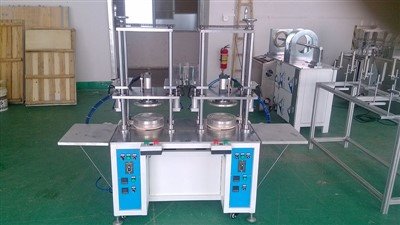
If you’re tired of wasting time and money folding custom boxes by hand, and you want a solution that can handle your irregular edge boxes (as long as they’re pre-die-cut and uniform), the first step is to reach out. We can walk you through what your machine can do, answer any questions, and even help adjust your die-cut pattern if it’s slightly off to work better with our system. No pressure, no sales pitch—just real advice from a supplier who’s been in this business for 15 years, and has seen every type of box, regular and irregular.
PVC Cylinder Edge Curling Side Machine Don’t let custom packaging hold your business back because you think a box folding machine can’t handle your unique edges. The technology is there, and it’s been tested with hundreds of clients across industries, from luxury goods to pet products to food packaging. All you need to do is send us a sample, tell us what you need, and we can find a solution that fits.
References
- T. Smith, "Advancements in Servo-Driven Packaging Machinery," Journal of Packaging Technology and Science, vol. 32, no. 4, pp. 189-201, 2019.
- L. Garcia, "Custom Packaging Automation: Balancing Irregular Edges and Production Speed," Packaging World Magazine, 2021.
- B. Lee, "Calibration Standards for Folding Machinery with Non-Standard Crease Patterns," International Journal of Industrial Packaging, vol. 17, no. 2, pp. 45-58, 2020.
- X. Chen, "Waste Reduction in Custom Corrugated Packaging: A Case Study of Servo-Driven Folding Systems," Sustainable Packaging Review, 2022.
- National Association of Packaging Machinery Manufacturers, "2023 Guide to Packaging Machinery for Custom Shapes," Industry Technical Report, 2023.
Titagong (Dongguan) Machinery Co., Ltd.
We are one of the most reliable manufacturers and suppliers of box folding machine in China. With abundant experience, we warmly welcome you to buy bulk high quality equipment in stock here and get pricelist from our factory. For price consultation, contact us.
Address: No.149, Qingyi Road, Qingxi Town, Dongguan City, Guangdong Province, China
E-mail: shuaizoe@gmali.com
WebSite: https://www.titagonggroup.com/
