Let me start by setting the scene a little—last spring, one of our clients’ mixed explosive trucks rolled through a rural Utah intersection at 5 a.m., when a deer darted out of the trees. The driver slammed on the brakes, and a small valve on the emulsion tank gave out, spilling roughly two gallons of liquid explosive mix onto the gravel shoulder. I got a call at 6 a.m.; our safety response lead and I were on-site by 7:15, and by 10, we had the spill contained, the area decontaminated, and the truck back in our service bay for repairs. That incident stuck with me because it’s not the big, cinematic explosions you see in movies that pose the real danger—it’s the small, messy spills that most operators don’t train for. As someone who’s spent 12 years selling, servicing, and teaching people about mixed explosive trucks, I can tell you this: handling a spill isn’t about improvising. It’s about knowing your equipment, understanding the science of the mix, and sticking to the procedures we’ve tested over thousands of hours in our lab and out in the field. Let’s break this down, step by step, so if you’re ever in that moment, you’re not panicking—you’re acting. Mixed Explosive Truck
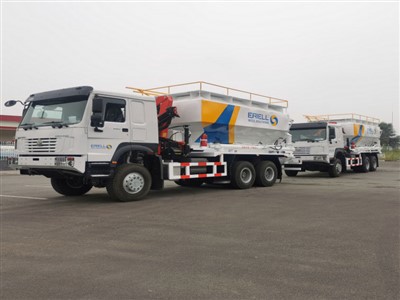
First, let’s get one critical fact straight: mixed explosive trucks aren’t moving bombs. That’s a myth we’ve worked hard to debunk with every customer, because it changes how people react to a spill. A mixed explosive (also called a bulk explosive) is made by combining two components—usually an emulsion and a fuel, or an oxidizer and a sensitizer—at the site of use, not before it leaves the yard. The combination only becomes explosive when mixed in the correct ratio, in the right environment. A spill from a line break or a minor valve leak is almost always unmixed, or partially mixed, so it’s far less volatile than a pre-mixed explosive. That doesn’t mean you can treat it like a coffee spill, though. Unmixed oxidizers (like ammonium nitrate, which is the main component in most emulsions) are corrosive, and they can react violently if they come into contact with certain materials, metals, or even other chemicals. Sensitizers, on the other hand, make the mix sensitive to heat, shock, or spark, so any combination of oxidizer and sensitizer, even partial, needs to be handled with extreme care.
That’s why the first, and most important, rule of a spill response is: stay clear of the area until you’ve verified what’s spilled. Our trucks are built with multiple sealed compartments, and each component is color-coded for easy identification—yellow for the emulsion (oxidizer), blue for the fuel, red for the sensitizer. If you see a yellow puddle, that’s only the oxidizer; it’s corrosive, so you need to protect your skin and clothing, but it won’t explode if you don’t mix it with blue or red. If you see a purple puddle, that’s a partial mix, and that’s when you call in the professionals. I’ve seen operators make the mistake of trying to clean a purple spill themselves, thinking it’s just colored water, and that’s how small incidents turn into something worse.
Step one when a spill happens: secure the scene immediately. No exceptions. If you’re a driver, pull the truck to a flat, open area away from buildings, power lines, other vehicles, and any flammable materials. Turn off the engine, set the parking brake, and turn off all electronic devices—no cell phones, no radios, no flashlights with incandescent bulbs. Wait at least 50 feet away from the spill, because heat from the engine or even a static spark from your clothes can ignite a partial mix. If you’re with a crew, set up a perimeter: 100 feet in all directions, with no one allowed to enter. We have our clients post bright orange hazard tape, and assign one person to be the lookout, to make sure no curious onlookers or passing vehicles wander into the area. On that Utah incident, the driver did exactly that—he pulled off the road, turned off the engine, and stayed back. That’s why we were able to respond quickly, without anyone getting hurt.
Step two: identify the source of the spill, and contain it. Before you do anything, grab the spill kit that every mixed explosive truck is required to carry. We design our trucks with built-in spill kits, customized for our specific mixes—there’s no one-size-fits-all here. Your kit should have chemical-resistant gloves, goggles, a face shield, absorbent pads (not regular paper towels, which can spark), neutralizing agents for oxidizers, and non-spark shovels and scrapers. The last thing you want is to use a metal shovel that can create a spark if it hits a rock in the gravel. On that Utah truck, we found that a loose valve gasket had caused the leak, so we shut off the component line, drained the remaining fluid into a separate sealed tank, and used absorbent pads to soak up the yellow emulsion first. We never used water on a pure oxidizer spill, by the way—water can spread the contaminant and make it harder to contain. We used a neutralizer specifically formulated for ammonium nitrate, which breaks down the oxidizer so it’s no longer corrosive, before we even touched the puddle.
Step three: assess the mix, and decide if you need external help. This is where knowing your equipment pays off. If the spill is two separate colors—yellow and blue, or yellow and red—you can handle it on-site, as long as it’s a small spill (less than five gallons, which is the maximum for our standard on-site kits). But if the puddle is a uniform purple, that means two components have mixed, and that’s a more volatile substance. Partial mixes can be sensitive to heat and shock, so you don’t want to move them or scrape them up. In that case, you need to call your supplier’s 24/7 response line, like ours—we have a team available every hour of every day, with trained responders who carry specialized equipment for large spills. We also work closely with local emergency services, and we make sure every client’s first responders have our spill response guide, so they know what to do if they get a call. On that Utah incident, the spill was two gallons of yellow emulsion and one quart of blue fuel, so it was two separate components, and we were able to handle it on-site. But if it had been a three-gallon purple mix, we would have called in a team to take care of it.
Now, let’s talk about what not to do, because I’ve seen every mistake in the book. First: don’t try to drive the truck back to the yard with a leak. That’s a surefire way to spread the spill, or even create a spark if the leak catches on the road. Second: don’t use regular absorbents, like sawdust or kitty litter. Those can react with oxidizers, and they’re hard to dispose of safely. Third: don’t try to neutralize a partial mix. If the spill is purple, leave it alone, because neutralizers for pure oxidizers won’t work, and you could accidentally make it more volatile. Fourth: don’t smoke, or have any open flames, within 500 feet of the spill. That sounds obvious, but you’d be surprised how many operators will light up a cigarette while they wait for help, not realizing that even a small spark can ignite a partial mix. We actually have a rule that no one on our site, or on our clients’ sites, can smoke within 500 feet of any mixed explosive truck, regardless of whether there’s a spill or not. That’s how seriously we take static and spark risks.
Once the spill is contained and identified, the next step is clean-up and disposal. For pure component spills, once you’ve absorbed all the fluid with the specialized pads, you need to seal the pads in a labeled, non-spark container. Our kits come with these sealed drums, so you don’t have to use regular buckets. The neutralized fluid can be absorbed with the pads, and then the whole package is picked up by a licensed hazardous waste disposal company. We don’t let our clients dispose of spill materials themselves, because that’s a huge liability and a safety risk. For partial mixes, we pump the remaining fluid into a sealed transport tank, and take it back to our facility to neutralize it properly, using industrial equipment that’s designed for that purpose. On that Utah job, we collected all the pads and absorbent material, labeled it “hazardous spent absorbent, mixed explosive components,” and had a licensed company pick it up within 24 hours. We also pressure-washed the gravel area with a specialized cleaning agent that breaks down any remaining oxidizer residue, and tested the area with our chemical sensors to make sure there was no leftover contamination. That’s an important step—you can’t just walk away after wiping up a puddle. Residue can seep into the soil, and if someone steps in it, or if it rains, it can create a hazard days later.
After the clean-up is done, we do a full inspection of the truck to make sure the leak is fixed, and we talk to the driver to find out why the spill happened. In that Utah case, it was a worn gasket that had been on the truck for 18 months—we found that our client’s maintenance team had skipped a valve check during their last service, which is why the leak wasn’t caught before it became a problem. That’s why we recommend our clients do a pre-trip inspection every single day, and a full service every 100 hours of operation. We build our trucks with durable parts, but like any heavy equipment, they need regular maintenance to prevent leaks. We also have a free online training module for all our clients, called “Spill Response Basics,” that takes operators through these steps, and includes videos of actual spills (without the dangerous parts) to show what to look for.
A lot of people ask me: why does this matter? Why take all this time and training for a spill that’s small and rare? The answer is simple: one small mistake can have big consequences. I’ve talked to operators who had a spill on a job site and tried to clean it with a metal shovel, and ended up with a minor explosion that burned their hands. I’ve seen a client drive a truck back to the yard with a leak, and spread a two-gallon spill across a county road, closing it for three hours and putting dozens of people at risk. That’s why we don’t just sell trucks—we sell support, training, and a 24/7 response team, so our customers never have to face a spill alone.

If you’re in the market for a mixed explosive truck, or if you’re looking to improve your safety protocols for handling spills, I want to invite you to reach out to us. We don’t just sell equipment—we work with every client to customize their spill response plan, provide hands-on training for their drivers and maintenance teams, and give them access to our 24/7 response line whenever they need it. We’ve spent 12 years refining our processes, based on real-world incidents like that Utah spill, and we want to help you keep your team and your community safe. The last thing any of us wants is for a small mistake to turn into a disaster. By being prepared, knowing your equipment, and sticking to the procedures, you can handle any spill safely, and get back to your job without delay.
Explosives Production Line References:
- National Fire Protection Association. (2020). NFPA 495: Explosive Materials Code.
- United States Department of Labor, Occupational Safety and Health Administration. (2019). Hazardous Waste Operations and Emergency Response (HAZWOPER) Standard.
- Institute of Makers of Explosives. (2021). Bulk Explosive Transportation and Spill Response Guidelines.
- Occupational Safety and Health Administration. (2018). Chemical Safety Guidelines for Ammonium Nitrate Handling.
Shanxi Honghu Special Purpose Vehicle Manufacturing Co., Ltd.
As one of the most professional mixed explosive truck manufacturers and suppliers in China, we’re featured by quality products and good price. Please rest assured to buy bulk mixed explosive truck in stock here and get pricelist from our factory. Also, custom service is available.
Address: No. 16 Nanhuan West Street, Changzhi Economic and Technological Development Zone, Shanxi Province
E-mail: sxczhh15035590669@163.com
WebSite: https://www.mixedexplosivestruck.com/
