Calcite powder is a widely used industrial material with a diverse range of applications. As a supplier of calcite powder, I am often asked about its chemical composition. In this blog post, I will delve into the details of what makes up calcite powder, its properties, and how it is utilized across various industries. Calcite Powder
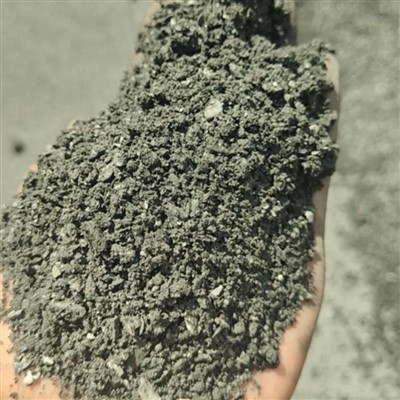
Chemical Composition of Calcite Powder
Calcite powder is primarily composed of calcium carbonate (CaCO₃). Calcium carbonate is a chemical compound that occurs naturally in several forms, including calcite, aragonite, and vaterite. Calcite is the most stable and common polymorph of calcium carbonate under normal conditions.
The chemical formula CaCO₃ indicates that each molecule of calcite consists of one calcium atom (Ca), one carbon atom (C), and three oxygen atoms (O). The calcium carbonate in calcite powder typically has a high degree of purity, often exceeding 95%. However, the exact composition can vary depending on the source of the calcite ore and the processing methods used.
In addition to calcium carbonate, calcite powder may contain small amounts of impurities. These impurities can include other minerals such as quartz, feldspar, mica, and clay minerals. The presence of these impurities can affect the physical and chemical properties of the calcite powder, including its color, brightness, particle size, and chemical reactivity.
Physical and Chemical Properties of Calcite Powder
Calcite powder has several unique physical and chemical properties that make it suitable for a wide range of applications.
Physical Properties
- Color: Pure calcite powder is white or colorless. However, the presence of impurities can give it a variety of colors, such as gray, yellow, pink, or brown.
- Particle Size: The particle size of calcite powder can vary depending on the grinding and classification processes used. It can range from very fine powders with particle sizes in the micrometer range to coarser powders with particle sizes in the millimeter range.
- Density: The density of calcite powder is approximately 2.71 g/cm³. This relatively high density makes it suitable for applications where a heavy filler or extender is required.
- Hardness: Calcite has a Mohs hardness of 3, which means it is relatively soft. This makes it easy to grind and process into fine powders.
Chemical Properties
- Acid Reactivity: Calcite is reactive with acids. When exposed to acids, calcite reacts to form calcium salts, carbon dioxide, and water. This property makes calcite powder useful in applications such as acid neutralization and soil conditioning.
- Thermal Stability: Calcite is thermally stable up to a certain temperature. At high temperatures (above 825°C), calcite decomposes into calcium oxide (CaO) and carbon dioxide (CO₂). This property is utilized in the production of lime, which is an important industrial chemical.
Sources of Calcite for Powder Production
Calcite is a widespread mineral that can be found in various geological settings around the world. Some of the common sources of calcite for powder production include:
- Limestone Deposits: Limestone is a sedimentary rock composed primarily of calcite. It is one of the most abundant sources of calcite and is widely used in the production of calcite powder. Limestone deposits can be found in many countries, including the United States, China, India, and Brazil.
- Marble Deposits: Marble is a metamorphic rock that forms from the recrystallization of limestone under high pressure and temperature. It is also a rich source of calcite and is often used in the production of high-quality calcite powder for applications such as cosmetics and pharmaceuticals.
- Chalk Deposits: Chalk is a soft, white, porous sedimentary rock composed primarily of calcite. It is formed from the accumulation of the shells and skeletons of marine organisms. Chalk is commonly used in the production of calcite powder for applications such as paper coating and rubber manufacturing.
Production Process of Calcite Powder
The production of calcite powder involves several steps, including mining, crushing, grinding, and classification.
- Mining: The first step in the production of calcite powder is the extraction of calcite ore from the mines. Calcite ore can be mined using various methods, including open-pit mining and underground mining.
- Crushing: Once the calcite ore is mined, it is transported to a processing plant where it is crushed into smaller pieces. Crushing is typically done using jaw crushers, cone crushers, or impact crushers.
- Grinding: After crushing, the calcite ore is ground into a fine powder using grinding mills. The most common types of grinding mills used in the production of calcite powder are ball mills, Raymond mills, and vertical roller mills.
- Classification: The ground calcite powder is then classified to remove any coarse particles and ensure that the powder meets the desired particle size specifications. Classification is typically done using air classifiers or sieves.
Applications of Calcite Powder
Calcite powder has a wide range of applications across various industries due to its unique physical and chemical properties. Some of the common applications of calcite powder include:
- Paper Industry: Calcite powder is used as a filler and coating pigment in the paper industry. It improves the brightness, opacity, and smoothness of the paper, as well as its printability and ink absorption.
- Plastic Industry: Calcite powder is used as a filler in the plastic industry to improve the mechanical properties of plastics, such as stiffness, strength, and impact resistance. It also reduces the cost of plastic products by replacing more expensive polymers.
- Rubber Industry: Calcite powder is used as a reinforcing filler in the rubber industry to improve the mechanical properties of rubber products, such as tires, belts, and hoses. It also enhances the abrasion resistance and tear strength of rubber.
- Paints and Coatings Industry: Calcite powder is used as a pigment and filler in the paints and coatings industry. It improves the hiding power, durability, and weather resistance of paints and coatings, as well as their gloss and smoothness.
- Construction Industry: Calcite powder is used in the construction industry as a filler in cement, concrete, and mortar. It improves the workability, strength, and durability of these materials, as well as their resistance to chemical attack.
- Pharmaceutical Industry: Calcite powder is used as an excipient in the pharmaceutical industry. It is used as a filler, binder, disintegrant, and lubricant in tablets, capsules, and other pharmaceutical formulations.
Conclusion
In conclusion, calcite powder is a versatile industrial material with a wide range of applications. Its primary chemical composition is calcium carbonate (CaCO₃), which gives it unique physical and chemical properties. The production of calcite powder involves mining, crushing, grinding, and classification processes. Calcite powder is used in various industries, including paper, plastic, rubber, paints and coatings, construction, and pharmaceuticals.
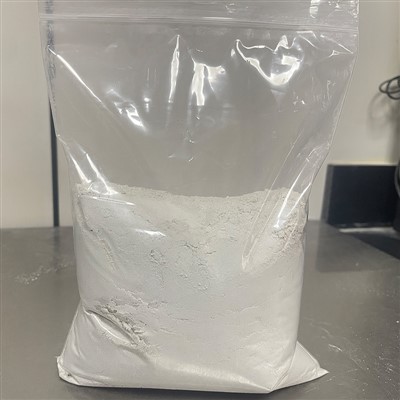
As a supplier of calcite powder, we are committed to providing high-quality products that meet the specific requirements of our customers. Our calcite powder is sourced from high-quality calcite ore deposits and processed using state-of-the-art equipment and technology. We offer a wide range of particle sizes and grades to meet the diverse needs of our customers.
Synthetic Alkali Powder If you are interested in purchasing calcite powder for your industrial applications, please feel free to contact us for a quote and to discuss your specific requirements. We look forward to working with you and providing you with the best possible products and services.
References
- Deer, W. A., Howie, R. A., & Zussman, J. (1992). Rock-Forming Minerals: Volume 4A, Non-Silicates: Oxides, Hydroxides, Sulphides, Sulphates, Carbonates, Phosphates, Halides. Longman Scientific & Technical.
- Klein, C., & Hurlbut, C. S. (1993). Manual of Mineralogy (20th ed.). Wiley.
- Vaughan, D. J., & Craig, J. R. (1997). Minerals and Rocks: An Introduction to Mineralogy and Petrology. Cambridge University Press.
Chaohu Jirun Energy Conservation and Environmental Protection Technology Co., Ltd.
We’re well-known as one of the leading calcite powder manufacturers and suppliers in China, also support customized service. Welcome to wholesale high quality calcite powder in stock here from our factory. If you have any enquiry about pricelist, please feel free to email us.
Address: No. 9, north of the intersection of Weihai Road and Weili Avenue, within the industrial park of Yinping Town, Chaohu City, Hefei City, Anhui Province.
E-mail: 13305654485@163.com
WebSite: https://www.chaohujirun.com/
