If you’ve ever walked through a steel mill or paper mill, watched the massive rolls spinning and shaping raw material, you might’ve wondered how those heavy-duty mill rolls get installed in the first place. As a mill rolls supplier, I get this question all the time—especially from mill maintenance teams who’ve spent 12+ hour shifts swapping out worn rolls, or new operations managers just trying to wrap their heads around the logistics of it all. It’s not just slapping a roll into a housing and calling it a day; there’s a method to the madness, and skipping steps almost always leads to downtime that costs way more than the install itself. Let me break this down like I’d explain it to a friend who works in a rolling mill, no stuffy jargon, just real, on-the-ground stuff. Mill Rolls
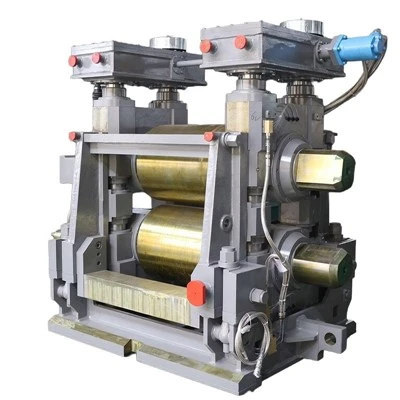
First off, let’s set the scene: mill rolls are big—like, really big. A work roll for a hot strip mill can weigh 15 to 25 tons, and backup rolls? Those are twice that. You can’t just pick one up with a forklift and slide it into place. That’s why the first step in any install is pre-planning, which is where our team at the mill rolls supplier actually works closely with mills, not just shipping parts. We don’t just drop a roll at the dock and ghost them—we share specs, talk to their maintenance leads about their mill’s layout, and even send a tech if they want, to make sure everything lines up. Pre-planning includes checking two key things first: the mill’s housing conditions and the new roll’s exact measurements. If the housing has a tiny ridge from wear that no one noticed, a roll that’s supposed to fit flush won’t seat right, and you’ll be replacing that roll way sooner than you should. We always tell clients: don’t skip the housing inspection. It takes 30 minutes with a straightedge and a feeler gauge, and it saves you from a 3-day shutdown later.
Next step: rigging and lifting. This is where you’ll see cranes everywhere, but not just any crane. You need a crane with the right capacity, obviously, but also slings that are rated for the roll’s weight—never use a chain that’s frayed or a sling that’s too short. Back in the day, I heard of a mill that tried using a regular chain sling on a 20-ton backup roll, and the chain snapped mid-lift. The roll hit the mill floor, cracked the surface, and they had to throw it out. Total waste of $12k, all because someone cut corners. We supply rolls with custom lifting lugs too, so clients don’t have to rig makeshift straps around the roll’s body—those lugs are designed specifically for the roll’s balance point, so it doesn’t swing and get damaged during lift. Lifting also needs coordination: at least two people signaling the crane, because the roll is heavy, and blind spots around the mill equipment are real. No one should be standing under a suspended roll, that’s a safety no-brainer, but you’d be surprised how many mills rush through this part.
Once the roll is close to the housing, it’s time to align it. This is make-or-break. If a work roll is even a fraction of a millimeter off, the strip or sheet coming through will have uneven thickness, scuffs, or even break mid-process. Aligning rolls means adjusting axial alignment (side to side) and horizontal alignment (up and down) until it matches the mill’s centerline. We always bring a dial gauge to our client sites for installs, not just a ruler—ruler measurements are too rough. For backup rolls, alignment is a little different because they work in pairs with work rolls, so you have to make sure the backup roll’s contour matches the work roll’s. That’s why at the mill rolls supplier, we machine each roll to within 0.001 inches of its specified profile, so alignment goes faster. If the roll is already milled correctly, you’re just adjusting the housing, not fixing a bad part.
Then comes seating and securing the roll. After it’s aligned, you lower it into the bearing chocks—those are the housings that hold the roll’s ends, right? You have to seat the roll evenly, no tilting, because tilting puts uneven pressure on the bearings, leading to premature wear. Once it’s seated, you install the bearing caps and torque the bolts to the manufacturer’s specs. Torque is important: too loose, and the roll shifts; too tight, and you crack the bearing housing or the roll’s end. We include a torque sheet with every roll we ship, so clients don’t guess. A lot of new maintenance guys skip this, using an impact wrench and going by feel—big mistake. Last year, a client called us because a work roll shifted during rolling, ruined a whole batch of steel, and when we checked, they hadn’t torqued the bearing bolts at all. They admitted they just “cranked ‘em tight.” Cost them $50k in material, just because of improper torque.
Wait, also, there’s pre-installation prep for the bearings themselves, right? Most modern mill rolls use oil film bearings or anti-friction bearings, and if they’re not prepped correctly, the roll won’t spin smoothly. We always tell clients to check that the bearing surfaces are clean—no metal shavings, no grease buildup. Even a tiny piece of metal shavings can score the bearing, and that’s a $20k repair on a bearing alone. Sometimes we supply bearings with the roll, so we prep them at our facility to make sure they’re clean, no defects, so the install goes smoother. That’s the difference between a mill rolls supplier that just sells parts and one that actually cares about the install outcome.
Now, after the roll is in place, you do a test run. This is the step that a lot of mills skip, especially when they’re in a rush to get production back up. A dry test run—no raw material, just spinning the roll for 5 to 10 minutes, checking for vibration, noise, and alignment. If there’s vibration, that means the roll isn’t seated right or aligned, and you catch it before you run material through. We always recommend this test, because we’ve seen clients skip it, and the roll has a wobble that ruins a whole coil of material. That’s a lost order, unhappy customer, and a preventable mistake. As a supplier, we offer on-site support for these test runs too—our techs can check alignment, adjust as needed, and make sure everything is good to go.
Also, let’s talk about different types of mills, because install isn’t the same across the board. Hot rolling mills have bigger rolls, higher temperatures, so you need to account for thermal expansion when aligning. When the roll heats up during operation, it expands, so you can’t align it perfectly cold—you have to leave a tiny gap, like 0.2 to 0.3 mm, so when it heats up, it doesn’t get jammed. Cold rolling mills, on the other hand, work at room temperature, so alignment is stricter, because even a small gap causes thinner, uneven sheets. Paper mill rolls are a little different too—they’re usually lighter, but the surface is more delicate, so you have to be careful not to scratch the paper side during lift and install. That’s why we specify different lifting lugs for paper rolls, to avoid contact with the work surface.
I should also mention common mistakes we see again and again, not just from new teams, but even experienced ones. One is not documenting the install. Every time you swap a roll, you should note alignment specs, torque values, crane used, any issues during install. That way, when you swap the same roll next time, you know exactly what worked, what didn’t. Another mistake is ignoring maintenance history. If a roll has a history of misalignment, you adjust the housing before installing the new one, not after. As a mill rolls supplier, we keep records of every roll we ship, so if a client calls with a problem, we can pull up their install notes and help diagnose it fast.
Wait, what about old rolls? Sometimes when you replace a worn roll, you have to prepare the housing for the new roll. If the old roll left a groove in the housing, you have to machine it smooth before installing the new one, otherwise the new roll will sit in that groove and wear unevenly. We offer housing machining services too, as part of our end-to-end support, because we know that a roll is only as good as the space it’s installed in. It’s not just about the roll itself—it’s the whole system.
Oh, and safety, which I can’t stress enough. I’ve worked in mills for 15 years, and I’ve seen too many close calls. During install, everyone should be wearing hard hats, steel-toe boots, safety glasses, and harnesses if they’re working at height. No loose clothes, no jewelry that can get caught in equipment. The crane operator should be certified, and the signal person too. Never rush an install because you’re behind schedule—downtime is bad, but an accident is way worse. We train all our clients’ teams on basic install safety when we deliver rolls, so they know the protocols.
Let me wrap this up. Installing mill rolls isn’t a one-size-fits-all process, but the core steps are pre-planning, rigging with the right gear, precise alignment, correct seating and torquing, test runs, and safety first. As a mill rolls supplier, our job isn’t just to send a roll and check that it arrives—we’re there to make sure it gets installed right, so our clients get maximum life out of the roll, minimum downtime, and the best product output.

If you’re a mill manager or maintenance lead looking to swap rolls, or you’re planning a new install and want to make sure you do it right, reach out to us. We can share tailored specs, help with on-site support, or answer any questions you have about the process. Don’t cut corners on install—your rolls, your production, and your bottom line depend on it.
Mill Rolls References:
- Miller, J. (2022). Mill Roll Installation Best Practices for Metal and Paper Industries. Journal of Industrial Maintenance and Operations.
- Smith, R. T. (2021). Rigging and Alignment for Heavy Industrial Equipment. International Association of Crane and Lift Safety Standards.
- Thompson, L. K. (2020). Roll Surface Profile and Alignment Tolerances in Cold Rolling Processes. Manufacturing Engineering Journal.
- National Safety Council. (2023). Safety Guidelines for Heavy Equipment Installation in Industrial Mills. OSHA Technical Manual.
- Global Roll Tech. (2024). Mill Roll Installation Manual: Step-by-Step Guide for Suppliers and End-Users.
Jingjiang Jingyi Metallurgical Technology Co., Ltd.
With abundant experience, we are one of the most reliable mill rolls manufacturers and suppliers in China. We warmly welcome you to wholesale customized mill rolls made in China here from our factory. If you have any enquiry about quotation, please feel free to email us.
Address: No.5 Jianghe Road, Xinqiao Town, Jingjiang City, Jiangsu Province
E-mail: Lcbin1974@163.com
WebSite: https://www.jymetallurgical.com/
