What’s Good (and Bad) About Granite Prices? From a Guy Who’s Supplying It Straight to You Granite
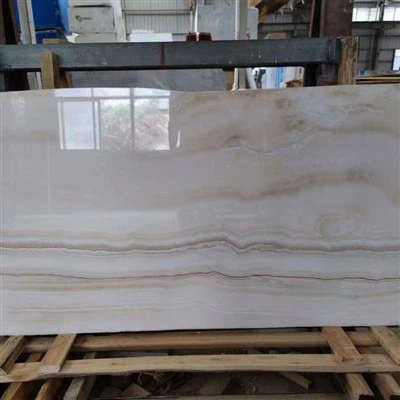
Hey there! If you’ve ever shopped for granite countertops (or any granite, really) and thought, “Wait, why is this slab $50 a square foot and that one $200?”, you’re not alone. I’ve been in the granite supply game for 12 years, and folks ask me this every single day. Let me break down what actually affects granite prices—no fancy jargon, just real talk from someone who’s hauled slabs, negotiated with quarries, and dealt with every curveball that comes with this stuff.
First off, let’s get one thing straight: granite isn’t just a rock. It’s a natural material, so every single slab is one-of-a-kind. That individuality is the biggest price driver, believe it or not. But there’s way more to it than how cool a slab looks. Let’s start with the most obvious place: where it’s mined. I work with quarries all over the world—from that big place in Brazil that cranks out those super dark, almost-black slabs, to a small family-owned quarry in northern India that makes those light, speckled ones with tiny blue flecks. The cost of getting that rock out of the ground, processing it into slabs, and shipping it to you changes a ton based on location.
For example, granite from Italy’s Carrara region (you know, the same marble Michelangelo used) isn’t marble—wait, no, hold on, people mix that up all the time—but their granite is super sought-after because it has that classic, crisp gray with subtle veining. The quarrying there is labor-intensive; the mountains are steep, so they can’t use huge, fancy machinery like they can in some places. That labor gets passed on to the customer. On the flip side, granite from parts of China is cheap because they have massive, highly automated quarries. But here’s the catch: even with that, some Chinese granite with really unique patterns still ends up pricey. It’s not just about how easy it is to get—supply and demand plays a huge part too. If a certain pattern blows up on Pinterest, everyone wants it, so the price jumps. I saw this a few years back when “calacatta-style” granite (which mimics that marble look) went viral. Suddenly, every customer wanted it, and the quarry couldn’t cut slabs fast enough, so we had to raise prices by 20% in two months. That’s not us being greedy—that’s basic market stuff.
Next up: the quality of the actual granite, and how it’s processed once it’s out of the ground. Let’s talk about raw quality first. Granite is rated by its density, hardness, and how resistant it is to scratches, heat, and stains. The super high-grade stuff—like that black granite from South Africa that’s almost non-porous? It’s way denser than, say, a lighter, more speckled granite from a smaller quarry. Dense granite is harder to cut, so that adds to the cost. But also, how many “flaws” are in the slab matters. Flaws aren’t just cracks—they’re things like tiny air pockets, uneven color bands, or mineral deposits that make the slab less consistent. A slab that’s almost perfect, with uniform color and no visible flaws, is way more expensive than one that has a few small spots here and there. When I pick slabs for our customers, I always point out the flaws because I don’t want them surprised when it’s installed. The perfect slabs? We set those aside for people who want a high-end look, and yeah, they cost more.
Then there’s the processing part. Once the quarry cuts the raw rock into big blocks, we (or a fabricator) have to cut those blocks into thin slabs, polish them, and get them ready to ship. The polishing process is a big one. Some granite takes longer to polish because it has really hard minerals that scratch the polishing pads. I once had a slab from Finland that had tons of quartz deposits—polishing that took three times longer than a regular slab, so we had to charge extra for it. Also, the size of the slab matters. Most standard slabs are about 9 by 5 feet, but if a customer needs a custom size—like a huge island countertop—we have to find a slab that’s big enough, and those are way harder to come by. I had a customer a few months back who wanted a 12-foot island, and we had to go to three different quarries before we found a slab that was long enough. That extra work and extra searching gets passed on.
Wait, and let’s not forget about import costs if you’re not buying domestic. I’m based in Texas, for example, so most of my granite comes from either domestic quarries here in the US, or from Canada, Brazil, or Italy. Shipping a 1,200-pound slab across the ocean isn’t cheap. There’s fuel costs, customs fees, insurance—all that adds up. A slab from a local quarry in Texas might cost $30 a square foot, but the same slab from a quarry in Brazil would be $45, just because of shipping. And if there’s a shipping delay? Like, if a ship gets stuck in the Suez Canal or something? That can make prices go up even more because the quarry might have to re-ship, and that cost gets shared with suppliers like me.
Another thing: demand for specific finishes. Most people know about polished granite—that’s the shiny, smooth finish you see in most kitchens. But there are other finishes too: honed (matte, no shine), leathered (soft, textured), brushed, even flaming (rough, like for outdoor use). Each finish costs a different amount to apply. Polished is the easiest and fastest, so it’s the cheapest. Honed takes a bit more work because you have to make sure the matte finish is uniform, not patchy. Flaming is even harder—you use high heat to blow up the surface of the granite, which makes it rough, but you have to be careful not to overdo it and ruin the slab. I did a big outdoor project last year where the customer wanted flaming granite, and the price per square foot was $25 more than polished, just because of the labor involved.
Also, let’s talk about scarcity. Some granite is only mined in one or two small locations, so there’s only so much of it. A few years back, a famous quarry in Norway that made that light gray granite with black swirls had a mining accident—they had to shut down for six months, and the supply dried up. Overnight, the price went up 30% because no one could get more of it. When that quarry finally opened back up, demand was still high, so it didn’t go back down for almost a year. Scarcity is huge with natural materials—you can’t just make more granite in a factory, right? It takes millions of years to form, so once a quarry runs out of a certain type, that’s it. I’ve had customers panic when they hear a quarry is closing, but I tell them to buy what they need right then because it’ll only get more expensive later.
Wait, and what about extra features? Like, if you want edgework—beveled edges, bullnose edges, that custom carving? That’s extra cost, obviously, but also if you want the seams to be super invisible. Seams are where two slabs meet, and some granites have different color veining that makes seams more noticeable. If you want us to match the veining perfectly, we have to hand-pick slabs that have the same pattern and cut them just right, which takes more time. That extra care adds up, and we charge for that because we want the customer to be happy with the final product.
I also have to mention that some suppliers (not me, by the way) will jack up prices if they know you don’t know anything about granite. That’s why I always tell customers to ask questions. Like, if someone says a slab is “commercial grade,” that just means it has more flaws, and it’s cheaper. “Premium grade” is the good stuff, no flaws (or almost none), and more expensive. Don’t be afraid to ask to see multiple slabs of the same type—sometimes what looks like the same pattern from a distance is totally different up close, and the pricier one is worth it.
Let me give you a real example. Last month, I had two customers: one wanted a basic polished granite for a guest bathroom, another wanted a premium leathered granite for their main kitchen. The first customer got a domestic granite with some small, natural specks—price was $35 a square foot, installed. The second went for a granite from India with a unique blue-gray pattern, no flaws, leathered finish—price was $120 a square foot, installed. That’s a huge difference, but it makes sense when you look at all the factors: location, quality, finish, demand.
Another thing I’ve noticed over the years: people often associate price with quality, and that’s usually true, but not always. I’ve seen a cheap granite that’s super durable and looks great, and an expensive one that had way more flaws than it should have. The key is to figure out what you need. If you’re doing a rental property, you don’t need premium granite—go with a solid commercial grade that’s durable and looks good. If you’re remodeling your forever home, splurge on the premium stuff because it’ll last your whole life and you’ll love looking at it every day.
I should also mention that there are some other smaller factors, like currency exchange rates. If I buy granite from a foreign quarry, and the US dollar gets weaker against the Brazilian real, I have to pay more for the same amount of granite, so I have to raise my prices to cover that. Last year, the dollar dropped, and I had to put a 5% price increase on all imported granite for a few months until rates stabilized. That’s out of my control, unfortunately. Also, transportation costs go up when fuel prices are high—hauling a truck of slabs is way more expensive when diesel is $4 a gallon than when it’s $2. That’s a constant headache for us suppliers, and it gets passed on to customers, but we try to keep that as low as possible by planning shipments and buying in bulk.
Wait, let’s circle back to what I said earlier about granite being one-of-a-kind. That’s the fun part of it, right? No two countertops will ever be exactly the same, which is why so many people love granite more than quartz (even though quartz is man-made and consistent). But that individuality is also what makes pricing tricky. A slab that’s almost identical to another one might have a tiny difference in a vein that makes it more desirable, so it’s more expensive. I had a customer once who fell in love with a slab because it had a little white heart-shaped vein right in the center—she would’ve paid $50 more a square foot for it because it was unique. That’s the stuff that makes the job worth it, even when prices are all over the place.
So, to wrap this up, the main factors that affect granite prices are: mining location and associated costs, supply and demand for specific types/patterns, raw granite quality (density, flaws), processing complexity (finish, custom cuts), shipping and import costs, scarcity of the granite, and extra custom features. It’s not just a random number someone pulls out of thin air—every part of getting that rock out of the ground and to your house has a cost, and that all adds up.

If you’re thinking about getting granite for your next project, whether it’s countertops, a fireplace surround, or outdoor tiles, hit me up. I can walk you through different options, show you slabs, and give you a fair price based on what you need. I don’t do hidden fees, and I’m not here to sell you something you don’t want—just straight talk, like I’ve been doing for 12 years. Let’s chat and figure out the best granite for your space and your budget.
Natural Quartzite References
- Natural Stone Institute. (2022). Global Granite Market Report: Quarrying, Processing, and Pricing Drivers.
- Marble Institute of America. (2021). Guide to Natural Stone Quality Grades and Pricing Factors.
- U.S. Energy Information Administration. (2023). Fuel Costs and Transportation Impacts on Building Material Pricing.
- International Union of Geological Sciences. (2020). Formation and Classification of Commercial Granite Varieties.
Xiamen Yigong Import and Export Co., Ltd.
As one of the most professional granite suppliers in China, we also support customized service. With abundant experience, we warmly welcome you to buy high quality granite for sale here from our factory. For price consultation, contact us.
Address: No.850-2 Xingxi Road, Houxi Town, Jimei District, Xiamen
E-mail: ella@xmyigong.com
WebSite: https://www.yigongstone.com/
