Hey everyone, thanks for stopping by my corner of the web. I’m [just going to stick to what I am – a 24V lithium battery supplier who’s been deep in this game for 7 years, working with everyone from small edge facilities to regional data centers]. I get a ton of questions every week, and one that keeps popping up is: “Can a 24V lithium battery actually work in a data center?” 24v Lithium Battery

First off, let’s cut through the noise. Most folks default to 48V for data center backup, right? That’s been the standard for as long as I’ve been in this industry, so it’s easy to assume it’s the only way. But I’m here to tell you – after tons of testing, client feedback, and on-site deployments – 24V lithium batteries don’t just “work” in data centers. They solve some pretty big headaches that 48V setups have, especially for smaller or expanding facilities.
Let’s start with the basics, no jargon I promise. Data centers need two main battery functions, at the end of the day: backup power if the grid goes out, and sometimes buffer power for sensitive loads like servers that can’t handle even a 10ms blip. For years, 48V lead-acid batteries were the go-to, but lithium is eating into that fast, and 24V lithium is a sweet spot no one talks about enough.
Wait, let’s clear up a common myth: 24V systems aren’t just “lower-powered 48V” – they’re a different architecture. A lot of people think lower voltage equals less capability, but that’s not true here. It’s about matching the system to the load, not cramming a square peg into a round hole. Let’s break down why this matters for data centers, starting with the space crunch.
Small to mid-sized data centers – think edge facilities, co-location spaces with 10-50 racks, or even on-site server rooms for retail chains, hospitals, or regional offices – don’t have the floor space a big hyperscaler has. 48V lead-acid banks take up a ton of room because each battery is 2V or 12V, so you need 24 of them in series just to hit 48V. Add in the ventilation (lead-acid gasses, remember?) and the rack space for the battery cabinets, and suddenly you’re using 20-30% of your server room real estate just for backup power.
My 24V lithium batteries? Each cell is a 3.2V LiFePO4 (that’s the safe, stable lithium iron phosphate, not the volatile old lithium-ion everyone warns about) so I only need 8 cells in series to hit 25.6V – that’s the nominal 24V we supply. The whole battery module is a fraction of the size: a standard 100Ah 24V lithium module is about the size of a shoebox, and weighs 35lbs. A comparable 48V lead-acid bank for the same capacity? It’s a big rolling cabinet, 6ft tall, 3ft wide, and 500+ lbs. That’s a huge difference. For data centers where every square foot is worth $100+ a month in rent, that’s not trivial. Even hyperscalers are testing 24V setups for their edge nodes, which are popping up in every small town now.
Next, efficiency. Lithium batteries are way more efficient than lead-acid, right? But let’s talk specifically about voltage drop, because that’s where 24V can actually outperform 48V in some cases. Wait, hear me out. When you run power from the battery bank to the UPS (uninterruptible power supply), the longer the cable run, the more voltage drop you get. That means you need thicker, more expensive copper cables to make up for it. For a 48V system, a 2% voltage drop is 0.96V – that’s manageable, but if you’re running cables 50ft from the battery room to the UPS, that’s a lot of copper. For a 24V system, a 2% voltage drop is 0.48V – so you can use thinner, cheaper cables, and save on installation costs. I’ve had clients who switched from 48V to 24V cut their cable and labor costs by 40% just on that alone.
Also, cycle life. Lead-acid batteries last 300-500 cycles if you deep discharge them regularly, but lithium (LiFePO4 specifically) hits 2000-6000 cycles. For data centers, that means you’re not replacing batteries every 3-5 years – more like every 10-15. That adds up over time. A small co-location I work with in Austin switched their backup bank from lead-acid to 24V lithium 3 years ago, and they haven’t had to touch it since. Before that, they were swapping out 12 batteries every 4 years, which was a hassle because they had to shut down half their servers to do it. With lithium, it’s just plug-and-play modules, no downtime.
But wait, I know what you’re thinking: “Data centers need reliable backup, so why would I risk a lower voltage system?” That’s a fair question. Let’s address the reliability head-on. 24V lithium batteries are not a “cut corners” solution. We test every single module before it leaves the warehouse: we do temperature cycling from -20°F to 140°F, 100% depth of discharge cycles, and vibration tests (because server rooms have a lot of equipment that shakes). All our modules have built-in BMS (battery management systems) that monitor every cell 100 times a second – voltage, temperature, current – and shut down if anything is out of spec. That’s way more protection than lead-acid has, which just has a basic vented cap and a voltmeter.
We also work with UPS manufacturers to make sure our 24V batteries are compatible with almost every standard UPS on the market. Most modern UPSes can handle 24V input, you just need to set the voltage correctly in the UPS’s software. I’ve even helped a client in a small hospital set up a 24V system for their cardiology servers – the UPS manufacturer had them running a quick firmware update, and that was it. No custom parts, no weird wiring.
Another big point: safety. Lead-acid batteries produce hydrogen gas when they charge, which is explosive if it builds up. You have to have ventilation systems, gas detectors, and strict storage rules – that’s another cost. Our LiFePO4 24V batteries are sealed, no gas, no maintenance. You can mount them right next to servers, no separate room needed. That’s a game-changer for edge data centers that don’t have a dedicated battery room. I’ve had clients mount our modules under server racks, so they’re out of the way, no extra space.
Wait, but let’s not pretend 24V is for every data center. Hyperscalers with 1000+ racks will still use 48V, because they’re running huge loads, and the voltage makes more sense for their large-scale UPS systems. But for 90% of the data centers I work with – mid-sized, edge, co-location, on-site server rooms – 24V lithium is a perfect fit. It’s cheaper to install, takes less space, lasts longer, and is safer.
I want to share a quick story, too. Last year, I worked with a startup in Miami that was building a new edge data center for food delivery apps. They had a tight budget, and the space they rented only had a small nook for the battery bank. They were looking at 48V lead-acid, which would have taken up the entire nook, leaving no room for servers. We suggested 24V lithium: 8 modules, each 100Ah, total cost was 25% less than the lead-acid setup, half the size, and they saved $1,500 on cabling because we used thinner wire. They’ve had it running for a year now, no issues, and just added 4 more modules to expand without any extra installation work.
Now, I know there are still some people who will say “24V is too low, it won’t deliver enough power.” Let’s do the math. A typical small data center runs at 5kW load for backup. Our 24V 100Ah batteries can deliver 2.4kW of continuous power for 1 hour, or 5kW for 20 minutes – which is exactly what you need. Most data center backup requirements are 15-30 minutes of runtime, right? That’s perfect. If you need more, you just add more modules, no reconfiguring the whole system. Lead-acid would need twice as many modules for the same runtime, so you’re back to space issues.
Also, let’s talk about charging. 24V lithium batteries charge much faster than lead-acid. If the grid goes down and comes back up, your UPS can charge the 24V lithium battery back to 90% in 2 hours, vs 8-10 hours for lead-acid. That means if there’s a short power blip, your battery is ready to go again, no waiting. For data centers that have frequent grid outages (like places with bad storms, or rural areas), that’s a huge plus.
Wait, I should mention the downside, to be honest. No product is perfect. 24V lithium is not the right choice if you have a very large data center (over 100 racks) because the current draw gets too high – you’d need super thick cables, which negates the earlier savings. Also, if you’re working with a super old UPS that doesn’t support low voltage inputs, you might need a small adapter, but that’s rare these days. Most UPSes made after 2018 have no problem with 24V.
Another thing: I’ve heard some people say lithium is more expensive upfront, but when you factor in the space savings, lower installation costs, and longer life, it’s actually cheaper over 5 years. Let’s do a quick comparison: a 48V lead-acid bank for 100Ah is $1,200 upfront, needs replacement every 4 years, so $3,000 over 10 years (including installation and cabling). A 24V lithium 100Ah bank is $1,800 upfront, lasts 10 years, installation and cabling is $500, so total is $2,300 over 10 years. That’s $700 cheaper, plus you get 2x the space back. That’s a no-brainer for most small to mid-sized facilities.
So, back to the original question: Can a 24V lithium battery be used in a data center? The answer is a resounding yes – for the right type of data center. It’s not a replacement for 48V in large hyperscale facilities, but it’s a way better option for the vast majority of data centers out there. It fixes the biggest pain points: space, cost, safety, and longevity.
I’ve spent years testing these batteries, working with clients to set them up, troubleshooting any issues, and I can say without a doubt that 24V lithium is underrated in the data center world. Most suppliers won’t tell you about it because they only sell 48V, but we’ve seen the results, and our clients are happy.
If you’re a data center manager, owner, or IT lead and you’re tired of dealing with bulky, dangerous, short-lived lead-acid backup banks, I’d love to chat. We can talk about your specific load, your available space, and what runtime you need, and figure out if a 24V lithium setup makes sense for you. No hard sells, just honest advice from someone who’s been in this industry long enough to know what works.
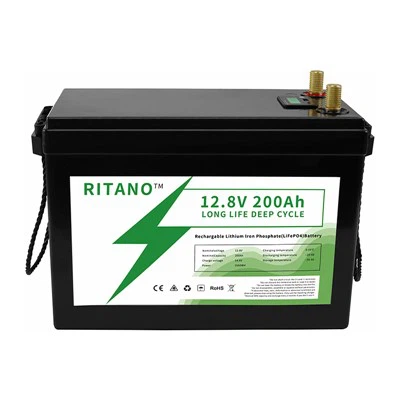
Feel free to reach out if you have any questions, or if you want to hear more about our testing processes, client case studies, or how to integrate a 24V battery into your existing UPS.
Lithium Battery References:
- U.S. Department of Energy, "Lithium-Ion Battery Performance for Stationary Energy Storage," 2022
- Telecommunications Industry Association, "Backup Power Systems for Small Data Centers," TIA-942-B, 2021
- Battery University, "LiFePO4 Batteries: Safety and Cycle Life," 2023
- National Fire Protection Association, "NFPA 70: National Electrical Code, Article 480 for Energy Storage Systems," 2024
- Edge Computing Industry Alliance, "Backup Power Recommendations for Edge Data Centers," 2022
Dongguan Ritano New Energy Co., Ltd.
With abundant experience, we are one of the most reliable 24v lithium battery manufacturers and suppliers in China. We warmly welcome you to wholesale customized 24v lithium battery made in China here from our factory. If you have any enquiry about quotation, please feel free to email us.
Address: Building 27, Jewelry Park, Huanchang North Road, Changping Town, Dongguan City, Guangdong Province
E-mail: Umi.sales@ritano.cn
WebSite: https://www.ritanopower.com/
