If you’ve ever sourced components from a flat wire winding supplier, you know that even small winding flaws can derail a perfectly good part—and, more importantly, a project. I’ve been working with flat wire as my core product line for over a decade, troubleshooting issues for every client from small robotics startups to global automotive manufacturers, and one truth holds: most common flat wire winding problems aren’t caused by cheap wire or outdated machines. They’re from small, preventable missteps that show up mid-production, forcing last-minute rework, missed deadlines, and frustrated teams. Today, I’m breaking down the most frequent flat wire winding issues I see, how they show up, and what suppliers (like mine) can do to fix them before your next production run. Flat Wire Winding

First up, maybe the most frustrating and frequent issue: inconsistent wire tension during winding. Flat wire isn’t round—its thin, rectangular profile means tension has to be calibrated perfectly at every stage of the process, not just set once at the start. Let me explain: round wire can stretch a bit without kinking, but flat wire has sharp edges that catch if tension is too high, or buckle if tension is too low. Early in my career, I watched a client’s entire prototype batch get scrapped because their new machine’s tension sensor drifted mid-run. The first 50 parts had perfect tension, but by the 200th, the tension was off by 15%—the wire was buckled along the core, and the winding layers were uneven. What made this so bad? The client didn’t check tension mid-run, and their old supplier only calibrated machines once a month, not for every job. For flat wire, tension isn’t a “set it and forget it” variable. It needs real-time monitoring, and a supplier worth working with should adjust tension every time the wire gauge, core size, or winding speed changes.
Next, edge damage to the flat wire itself. Flat wire’s defining feature is its thin, flat cross-section—usually a fraction of a millimeter thick, with sharp or rounded edges depending on the application. But when the winding process isn’t set up right, those edges get nicked, crushed, or folded over, and that damage might not show up until the final assembly. I had a medical device client a couple years back that brought us a batch of flat wire coils for their catheter motors. They’d sourced from another supplier, and after assembling 50 units, 12 failed because the wire’s edges had tiny micro-nicks from winding. The nicks caused hotspots when current ran through the wire, overheating the motor and shutting it down. When we tested the bad coils, we saw that the supplier’s wire guides were worn—they were made of cheap plastic that scraped the wire edges as it fed through. For high-stakes applications like medical or automotive, edge damage isn’t a cosmetic flaw—it’s a safety risk. Good suppliers invest in precision wire guides (usually ceramic or polished metal) and inspect every coil under a high-powered microscope before shipping, because a micro-nick can sink a whole project.
Then there’s uneven layer stacking and winding displacement. Round wire coils have a bit of flexibility, but flat wire’s flat shape means each layer has to sit perfectly parallel to the one below it, with no gaps or overlaps. If a layer shifts even a millimeter, the whole coil’s dimensions are off—critical for applications where the coil has to fit into a tight housing, like transformers or voice coils for speakers. I once worked with a consumer electronics brand that missed a product launch deadline because their coil supplier’s winding arm was misaligned. The layers were overlapping, making the coil 0.2mm thicker than the design spec. That meant it couldn’t fit into the speaker’s casing, and retooling the casing cost them $120,000 and a two-month delay. The problem? The supplier didn’t have a process to check layer alignment after every job, so a worn bearing on the winding arm went unnoticed. Proper alignment requires post-winding dimensional checks (using a micrometer calibrated specifically for flat wire, not round wire) and regular maintenance of winding arms and bearing.
Another common headache is dimensional inconsistency across a coil run. This is different from layer stacking—this is when individual turns or whole coils vary in width, thickness, or resistance, even though they’re supposed to match the design. Flat wire’s resistance is directly tied to its cross-sectional area, so even a 5% variation in width can make a whole batch of coils useless for applications like power inductors, where consistent resistance is non-negotiable. A solar inverter client came to us after their first batch of inductors failed efficiency tests. The coils had a 12% difference in wire width between the first and last coil in the run, which meant some had higher resistance, causing the inverters to waste energy. The root cause: the supplier was using off-the-shelf round wire cutting tools for flat wire, which don’t account for the flat profile, so the wire got stretched or compressed during cutting. For flat wire, every step—from cutting to winding—needs specialized tooling that accounts for the rectangular cross-section, not just adapting round wire processes.
Thermal stress and post-winding deformation might not show up right away, but they’re one of the trickiest problems to fix. When flat wire is wound at high speeds, friction between layers and between the wire and core generates heat. If that heat isn’t dissipated properly, the wire cools unevenly, leading to bending, warping, or even tension that makes the coil shift after it’s shipped. I had a robotics client that ordered flat wire coils for their arm’s joint motors. When they installed them a week after receiving them, half the coils were warped—they wouldn’t sit flat in the motor housing, so the motors wouldn’t align correctly. The supplier had wound the coils too fast with no active cooling, and the high heat caused the wire to deform as it cooled. The fix here isn’t just running slower; it’s having controlled cooling systems during winding, plus a stress-relief step after the coil is finished. Stress relief involves heating the coil to a specific temperature (way below the wire’s melting point) and holding it there for a set time to eliminate residual tension, so it stays in shape long after it leaves the supplier’s facility.
I also see a lot of mistakes with insulation breakdown, especially on coated flat wire. Many flat wire applications use insulated wire—like polyurethane or polyester enamel coating—to prevent short circuits between turns. But winding too tight, or winding over a sharp bend in the core, can scratch or crack that insulation, leading to shorts when the coil is in use. A power tool manufacturer once had a recall of 50,000 drills because their flat wire stator coils had insulation breakdown. The supplier had wound the coils around a sharp core corner, and the insulation got scraped, but the damage wasn’t visible until the drill was run under load. The key here is designing winding processes that avoid sharp, tight bends, and doing an insulation resistance test on every coil before shipping. That test involves running a small current between the coil and core to make sure there are no gaps or damage in the insulation—something many smaller suppliers skip to save time.
Now, here’s the thing: almost all these problems are avoidable. After 10 years in this business, I’ve built my flat wire winding process around fixing these issues before they reach the client. That means investing in real-time tension monitoring systems, precision ceramic wire guides, calibrated flat-wire-specific cutting tools, active cooling during winding, stress-relief ovens, and 100% dimensional and insulation testing for every coil. I’ve had clients come to me fresh off a bad experience with another supplier—once, a startup that had their prototype scrapped three times because of layer displacement—and by switching to our process, they got a perfect run on the fourth prototype, cutting their time to market by two months.
At the end of the day, flat wire winding isn’t about running a fast line and pumping out parts. It’s about paying attention to the unique properties of flat wire—its rectangular shape, its sensitivity to tension and edge damage, its need for specialized tools—and building a process that accounts for every variable. Too many suppliers treat flat wire like just another type of wire, applying processes that work for round wire, and that’s where the problems start. If you’re working on a project that uses flat wire coils, or you’ve been struggling with winding issues on your current batches, I’d encourage you to reach out. Together, we can go over your design, troubleshoot any past issues, and make sure your next production run is on time, on spec, and free of the common flat wire winding problems that derail so many projects.
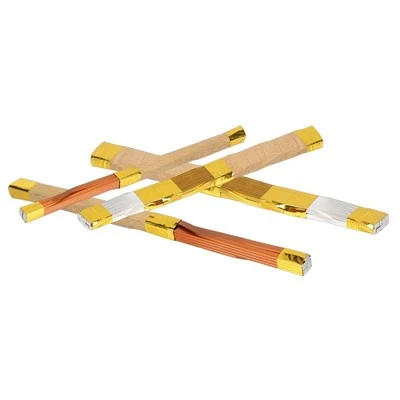
If you have questions about your current flat wire winding processes, need a quote for a prototype run, or want to discuss specifications for your next component, feel free to get in touch to connect for a purchasing conversation.
Enameled Round Wire References
- Flat Wire Winding: Principles, Processes, and Applications. Industrial Press, 2021.
- "Common Defects in Enameled Flat Wire Coils." Journal of Precision Manufacturing, vol. 18, no. 3, 2020, pp. 124-137.
- Tension Control in Wire Winding: A Practical Guide. Society of Manufacturing Engineers, 2019.
Tianjin Jingwei Power Technology Co., Ltd.
As one of the most professional flat wire winding manufacturers and suppliers in China, our products have good reputation in the market. We warmly welcome you to buy durable flat wire winding for sale here from our factory. Good service and quality products are available.
Address: No.1 Chuangxin Rd. Xiaozhan Industrial Park, Jinnan District, Tianjin, China
E-mail: info@jwdc.cn
WebSite: https://www.jwdcs.com/
