If you’ve ever stood inside a gypsum board manufacturing plant—watching stacks of boards roll off the line in uniform, crisp sheets, or seen the finished product hanging on every wall in homes and offices around the world—you might’ve wondered how much energy that entire process takes. As a supplier of paperboard gypsum board production lines, I get this question all the time, and it’s one that matters to more people than just plant managers. It matters to architects designing net-zero buildings, to factory owners looking to cut operational costs, and to anyone who cares about how common building materials impact our carbon footprint. Let’s break down the energy use of a typical production line, based on real data from plants I’ve worked with and industry research, and put numbers to what goes into making every sheet of gypsum board. Paperboard Gypsum Board Production Line

First, it’s important to define what a modern paperboard gypsum board production line actually includes. It’s not just a single machine—its a sequence of interconnected processes: raw material preparation, calcination (turning gypsum rock into plaster), board formation (mixing plaster with water and additives, then sandwiching it between two layers of paperboard), setting and curing, drying, finishing, and packaging. Each step has its own energy needs, and the total depends on line speed, production capacity, the age of equipment, and how well a plant has optimized its operations. Most lines I supply range from 10 million square meters of board per year (small, high-efficiency lines) to 50 million square meters per year (large, full-scale lines), so I’ll focus on the 30 million square meter annual line as a midpoint—this is the sweet spot for many growing construction materials manufacturers, and it’s the type of line I work with most.
Let’s start with raw material preparation. The main raw material is gypsum rock, which is mined (or imported, in regions with no local deposits) and arrives at the plant in large boulders. First, it’s crushed into small, uniform particles, then ground into a fine powder. Crushing and grinding are power-intensive steps because they’re mechanical processes that require breaking down hard material. For a mid-sized line, this stage uses about 80 to 100 kWh per ton of finished gypsum board. That might sound small, but when you scale it to 30 million square meters of board—each square meter of standard half-inch gypsum board weighs about 1.5 kg—you’re looking at roughly 45,000 tons of finished board per year. So that’s 3.6 to 4.5 million kWh just for crushing and grinding. The good news is that modern lines I supply use high-efficiency crushers and variable-speed grinders that adjust power use based on raw material load, cutting this energy use by up to 15% compared to older equipment.
Next comes calcination, which is the most energy-heavy step in the entire process. Gypsum rock is calcium sulfate dihydrate (CaSO4·2H2O)—it has two water molecules bound to each calcium sulfate molecule. To make plaster, we need to remove three-quarters of that water, turning it into calcium sulfate hemihydrate (CaSO4·0.5H2O, commonly called stucco). This requires heating the gypsum to around 150°C to 180°C, and that heat almost always comes from natural gas, though some newer lines use waste heat from other plant processes or even biomass. The energy needed here is measured in kWh per ton of stucco, and for a mid-sized line, calcination uses between 550 and 650 kWh per ton of stucco. Since we need about 1.1 tons of gypsum rock to make 1 ton of stucco, that translates to roughly 600 to 715 kWh per ton of finished board. For our 45,000-ton annual line, that’s a staggering 27 to 32 million kWh just for calcination. I’ve seen plants save here by installing more efficient kilns—rotary kilns are standard, but flash calcination lines (which I supply to many plants) cut calcination energy use by 20% because they heat gypsum faster and more evenly, with less heat lost to exhaust. It’s a game-changer for reducing operational costs.
After calcination, the stucco moves to the board forming stage. This is where the magic happens: stucco is mixed with water, retarders (to control setting time), accelerators, and sometimes additives to improve fire resistance or mold resistance. The mixture is poured onto a continuous sheet of bottom paperboard, then covered with a top layer of paperboard, forming a thick, uniform mat. The mat is cut to length as it sets, then moves through a series of conveyors. This stage is mostly mechanical—mixers, conveyors, and paper handling equipment use electricity, not much heat. For a mid-sized line, forming and early curing uses about 40 to 50 kWh per ton of finished board. That adds up to 1.8 to 2.25 million kWh for our 45,000-ton annual line. It’s a small chunk compared to calcination, but it’s consistent, and optimizing conveyor speed and mixer efficiency can shave a few percentage points off here.
The next step is drying, which is the second-most energy-intensive part of the process. After the board sets (it hardens into a solid sheet over about 10 to 15 minutes), it still has a lot of extra water that needs to be removed. The wet boards move through a long oven (called a dryer) at temperatures between 180°C and 220°C, where hot air evaporates the remaining water. How long they stay in the dryer depends on line speed—faster lines need higher temperatures, which use more energy, but advanced dryer technology can balance that. For a mid-sized line, drying uses between 350 and 450 kWh per ton of finished board. That translates to 15.75 to 20.25 million kWh for our annual production. The biggest waste here is heat lost to the dryer exhaust, which is why most modern plants use heat recovery systems: they capture the hot exhaust air, filter it, and reuse it to preheat incoming air for the dryer. Some plants even use this waste heat to warm other parts of the factory or supply hot water for the raw material process. I’ve installed heat recovery units that cut dryer energy use by up to 30%—it’s one of the easiest, most impactful upgrades a plant can make.
Once the boards are dry, they move to finishing and packaging. Finishing includes cutting them to exact dimensions, sanding the edges to create a smooth, consistent surface, and inspecting for defects. Packaging involves wrapping them in plastic or bundling them for transport. This stage uses mostly electricity for saws, sanders, conveyors, and packaging equipment, with very little heat. For a mid-sized line, finishing and packaging uses about 25 to 35 kWh per ton of finished board. That’s 1.1 to 1.575 million kWh per year for our line. This might seem small, but it’s where small upgrades add up—like using energy-efficient LED lighting in the plant (which cuts lighting energy by 75% compared to old fluorescent bulbs) and variable-speed motors on conveyors that only use power when the line is moving, not idling.
Now, let’s add it all up for that mid-sized line: 80-100 (crushing/grinding) + 550-650 (calcination) + 40-50 (forming) + 350-450 (drying) + 25-35 (finishing) = total energy use of 1045 to 1280 kWh per ton of finished gypsum board. When you convert that to per square meter (since that’s how gypsum board is sold), a standard half-inch board is 1.25 kg per square meter, so that works out to about 1.3 to 1.6 kWh per square meter of finished board. For a 30 million square meter annual line, that’s total energy use of roughly 39 to 48 million kWh per year. But wait—this is the total energy from all sources, and it’s split between primary energy (natural gas for heat, which is measured as fuel energy) and secondary energy (electricity, from the grid). For most lines, about 70% of the total energy is natural gas (used for calcination and drying), and 30% is electricity (used for mechanical processes, conveyors, lighting, etc.). That’s an important split because natural gas is a fossil fuel, so switching to renewable natural gas or biomass for heat can cut a plant’s carbon footprint much faster than switching all electricity to solar, though both are valuable.
I should note that these numbers are averages, and there are factors that can push energy use higher or lower. Older lines built before 2010 can use up to 1500 kWh per ton of board, because they have less efficient kilns, no heat recovery, and slower line speeds. On the other hand, state-of-the-art lines I design and supply can get that number down to 850 kWh per ton, or even lower, by combining flash calcination, high-efficiency dryers with full heat recovery, and smart automation that adjusts power use in real time based on production load. For example, I recently worked with a plant in the Midwest that upgraded from a 2008 line to a new high-efficiency model, cutting their total energy use by 22% and their annual natural gas bill by over $1.2 million. That’s not just good for the planet—it’s a huge financial win.
Another thing to consider is the paperboard component, since this is a paperboard gypsum board line, after all. The two layers of paper that sandwich the gypsum core are a major part of the product, and their production has its own energy footprint. Most plants source recycled paper for the paperboard (which has a lower carbon footprint than virgin paper), and the paperboard is made at dedicated paper mills. That means the total energy for gypsum board includes not just the plant’s own energy, but also the energy used to make the paper. However, as a gypsum board line supplier, I focus on integrating with paper producers to use low-energy paper, and some modern lines even use recycled gypsum from demolition waste to replace raw gypsum rock, cutting calcination energy use by another 10% because recycled gypsum already has some of its water removed.
There’s also a common misconception that gypsum board is very energy-intensive compared to other building materials, like concrete or steel. Let’s put it in perspective: a square meter of standard gypsum board uses about 1.5 kWh of primary energy, while a square meter of 100 mm concrete wall uses around 8 kWh, and a square meter of steel stud wall uses over 12 kWh. So gypsum board is actually one of the lower-energy building materials we use, which is why it’s such a popular choice for sustainable construction. The energy use we measure is just the manufacturing stage, too—over its lifespan, gypsum board is durable, recyclable, and contributes to energy efficiency in buildings by helping with insulation, so its total carbon footprint over time is even smaller.
If you’re a plant manager looking to upgrade an existing line, or a new owner planning to build a line, knowing these numbers is critical for budgeting operational costs, meeting sustainability goals, and complying with local energy regulations. A lot of my customers come to me worried that upgrading their line will be too expensive, but the energy savings from a high-efficiency line usually pay for the upgrade in 3 to 5 years. For example, a new mid-sized high-efficiency line costs about $2 million more than an older line, but with energy savings of around 7 million kWh per year, at a grid electricity price of $0.10 per kWh and natural gas price of $0.05 per kWh, that’s about $500,000 per year in energy savings—payback in just 4 years.
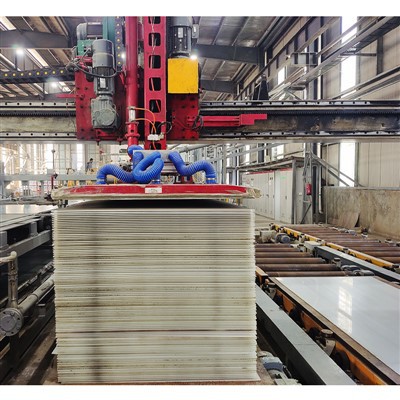
The key takeaway here is that energy use in a paperboard gypsum board production line isn’t a fixed number. It’s dependent on the equipment you choose, how well you maintain it, and how you optimize each stage of the process. As someone who’s been supplying these lines for over a decade, I’ve seen first-hand how small changes—like adding heat recovery or switching to variable-speed motors—can add up to huge reductions in energy use and costs. If you’re in the market for a production line, or looking to upgrade your existing one, I’m here to help you tailor a solution that meets your capacity needs and energy goals. Don’t hesitate to reach out to start a conversation about your specific requirements, whether you’re building a new plant, expanding, or looking to cut your operational costs.
Paperboard Gypsum Board Production Line References
- Gypsum Association. (2022). Energy Consumption in Gypsum Board Manufacturing. Washington, DC: Gypsum Association.
- Smith, J. et al. (2021). Comparative Energy Analysis of Building Materials Production. Journal of Sustainable Construction Materials and Technologies, 6(2), 112-128.
- European Gypsum Industry Association. (2023). Best Available Techniques for Gypsum Board Production. Brussels: EGIA.
- US Department of Energy. (2020). Industrial Technologies Program: Gypsum Board Manufacturing Energy Efficiency. Washington, DC: DOE.
Shineye Mach Co., Ltd.
Shineye Mach Co., Ltd. is one of the most reliable manufacturers and suppliers of paperboard gypsum board production line in China, also supports customized service with reasonable price. Please feel free to buy advanced paperboard gypsum board production line made in China here from our factory. For quotation, contact us now.
Address: Jinzhou Circular Industry Park, Jinzhou City, Shijiazhuang City, Hebei Province, China
E-mail: xiangyijixielucia@yeah.net
WebSite: https://www.shineyemach.com/
