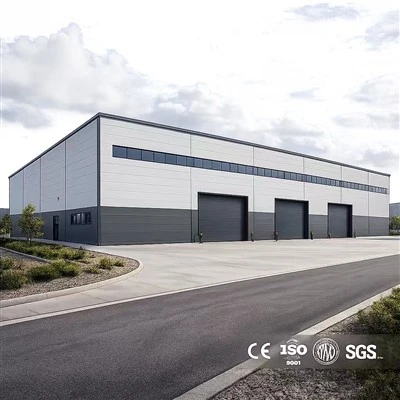
As a supplier of commercial metal buildings, I often encounter potential clients who are not only interested in the durability, versatility, and cost – effectiveness of our products but also in the financial incentives that come with their purchase. One question that frequently arises is: Are there any tax incentives for using commercial metal buildings? In this blog post, I’ll delve into this topic, exploring the various tax benefits that businesses might enjoy when investing in commercial metal structures. Commercial Metal Buildings
Depreciation Deductions
One of the most significant tax advantages of commercial metal buildings is the ability to depreciate the asset over its useful life. Depreciation is an accounting method that allows businesses to allocate the cost of an asset over a period of time, reflecting the wear and tear, deterioration, or obsolescence of the property.
The Internal Revenue Service (IRS) in the United States classifies commercial metal buildings as non – residential real property. According to IRS regulations, non – residential real property can generally be depreciated over 39 years using the straight – line depreciation method. This means that businesses can deduct a portion of the cost of the metal building each year for tax purposes.
For example, if a company purchases a commercial metal building for $1 million, they can deduct approximately $25,641 ($1,000,000 / 39) per year from their taxable income. This deduction reduces the company’s overall tax liability, providing significant savings over the life of the building.
Energy – Efficiency Tax Credits
In recent years, there has been a growing emphasis on energy efficiency in commercial construction. Many governments around the world offer tax credits and incentives to businesses that invest in energy – efficient buildings, and commercial metal buildings are no exception.
Metal buildings can be designed and constructed to be highly energy – efficient. They can incorporate features such as insulation, energy – efficient windows, and solar panels. In the United States, the Energy Policy Act of 2005 provides tax incentives for commercial buildings that meet certain energy – efficiency standards.
The Commercial Building Tax Deduction, also known as Section 179D, allows businesses to deduct up to $1.80 per square foot of the building if it reduces the total annual energy and power costs by 50% or more compared to a reference building that meets the minimum requirements of ASHRAE Standard 90.1 – 2001. Even if the building does not meet the 50% reduction threshold, partial deductions may be available for improvements to the lighting, HVAC systems, or building envelope.
Accelerated Depreciation for Certain Industries
Some industries may be eligible for accelerated depreciation schedules for their commercial metal buildings. For instance, the IRS offers special depreciation rules for businesses in the manufacturing, agriculture, and renewable energy sectors.
In the manufacturing industry, companies may be able to take advantage of bonus depreciation. Bonus depreciation allows businesses to deduct a larger percentage of the cost of a qualified asset in the year it is placed in service. As of 2023, businesses can deduct 80% of the cost of qualified property, including commercial metal buildings, in the first year.
Agricultural businesses can also benefit from favorable depreciation rules. The IRS allows farmers and ranchers to depreciate their farm buildings, including metal structures used for storage, livestock housing, and equipment shelters, over a shorter period compared to non – agricultural buildings.
State and Local Tax Incentives
In addition to federal tax incentives, many state and local governments offer their own tax breaks for businesses that invest in commercial metal buildings. These incentives can vary widely from one jurisdiction to another and may include property tax abatements, sales tax exemptions, and income tax credits.
Property tax abatements are common in many areas. A property tax abatement is a reduction or exemption from property taxes for a specified period of time. This can be a significant financial benefit for businesses, as property taxes can be a major ongoing expense. For example, some cities may offer a 10 – year property tax abatement for new commercial construction, which can result in substantial savings over the life of the abatement period.
Sales tax exemptions are another potential incentive. Some states and localities exempt the purchase of building materials, including metal building components, from sales tax if the building is used for certain qualifying purposes, such as manufacturing or research and development.
Economic Development Incentives
In some cases, businesses may be eligible for economic development incentives when they build a commercial metal building in certain areas. These incentives are often designed to attract new businesses, create jobs, and stimulate economic growth in a particular region.
Economic development incentives can take many forms, including tax credits, grants, low – interest loans, and infrastructure improvements. For example, a local economic development agency may offer a job creation tax credit to a business that builds a new metal manufacturing facility and hires a certain number of local employees.
How These Tax Incentives Benefit Our Clients
As a supplier of commercial metal buildings, these tax incentives are a valuable selling point for our clients. They not only reduce the upfront cost of the building but also provide long – term financial benefits that can improve the bottom line of a business.
For small and medium – sized enterprises, the tax savings from depreciation deductions, energy – efficiency credits, and other incentives can free up capital that can be reinvested in the business. This can lead to increased productivity, expansion, and job creation.
Large corporations can also benefit from these incentives. The ability to reduce their tax liability can improve their financial performance and make them more competitive in the market. Additionally, investing in energy – efficient metal buildings can enhance their corporate social responsibility profile, which is increasingly important to consumers and investors.
Contact Us for More Information
If you’re considering investing in a commercial metal building, it’s important to understand the potential tax incentives that may be available to you. Our team of experts is well – versed in the tax benefits associated with commercial metal buildings and can provide you with detailed information and guidance.
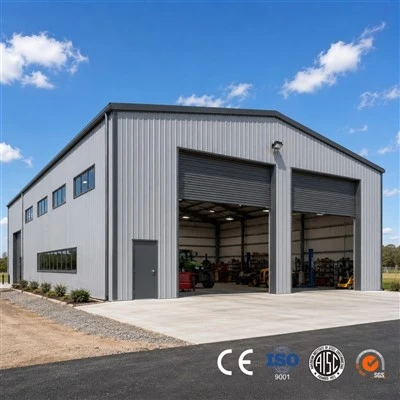
We can work with you to design a metal building that meets your specific needs and takes advantage of all available tax incentives. Whether you’re in the manufacturing, agriculture, or any other industry, we have the experience and expertise to help you make the most of your investment.
Steel Warehouse Contact us today to discuss your project and learn more about how our commercial metal buildings can not only provide a durable and cost – effective solution but also offer significant tax advantages. Let’s start a conversation and see how we can work together to build the perfect commercial structure for your business.
References
- Internal Revenue Service (IRS). "Publication 946: How to Depreciate Property."
- Energy Policy Act of 2005.
- Various state and local government economic development agencies’ websites for information on local tax incentives.
Liaoning Zhongbei Steel Structure Engineering Co., Ltd.
Liaoning Zhongbei Steel Structure Engineering Co., Ltd. is one of the most professional commercial metal buildings manufacturers and suppliers in China, also supports customized service. We warmly welcome you to buy advanced commercial metal buildings made in China here from our factory. Also, quotation is available.
Address: No. 239 – 1, Shenbei West Road, Yuhong District, Shenyang, Liaoning.
E-mail: Info@cnssgroup.cn
WebSite: https://www.cnssprefabbuildings.com/
